Rubber Scrap and Tyre Recycling in India 2026: Complete Compliance Guide for Sellers, Recyclers and EPR Obligated Entities

 25 May, 2026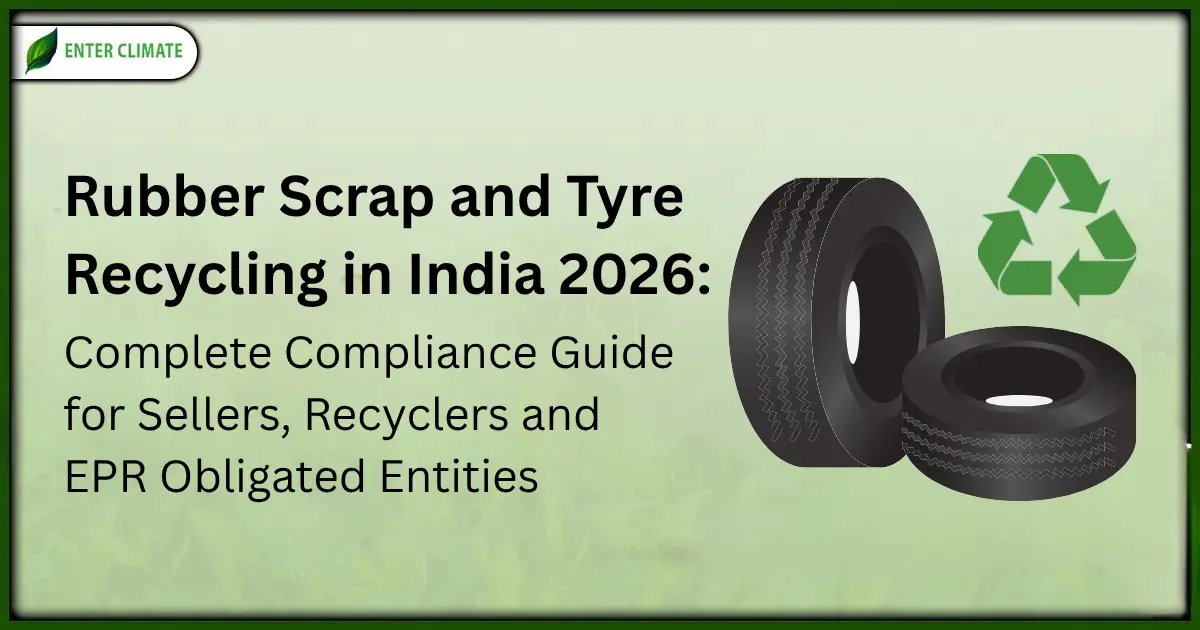
The automobile sector in India is facing an increase in the rubber scrap and tyre recycling. But why? The primary reason for increasing waste tyres in India, which is merely due to increase in vehicle acquisition and a large quantity of waste tyres being openly dumped or burned.
Currently, India generates approx. 1.5 to 2 million tonnes of waste tyres, and 2.8 million tonnes of End-of-Life tyres annually. Moreover, it has become a major dumping ground for imported waste tyres, creating hurdles for local facilitators to recycle waste tyres, resulting in non-compliance with EPR for waste tyres, and disruption in the tyre waste management in India.
With growing environmental and public health concerns, sustainable waste tyre management in India is a crucial requirement. It is implemented by following EPR guidelines that sellers, recyclers and other entities generating rubber scrap, and recycling tyres are obligated to comply with. It requires all entities to apply for registration on the CPCB EPR portal.
Read more – What permissions are required from MOEF for the import of rubber Scrap?
Why Tyre Recycling Compliance is Becoming Stricter in 2026?
The tyre recycling sector in India is getting more inclined towards the digitally monitored and compliant recycling systems. Growing environmental concerns, CPCB monitoring, and traceability are major requirements.
Businesses must stay compliant with authorized waste tyre management channels along with verifying recycling documentation. They must maintain proper records of waste tyre disposal, verify recyclers, track EPR certification, and ensure proper annual compliance reporting for smooth operations.
Eligible Entities Under Tyre Waste and EPR Rules in India
The Tyre Waste and EPR rules in India apply to tyre-producing entities. They must apply for the waste tyres registration on the CPCB EPR portal to manage ELTs, along with reducing pollution. Look below to get clarity and understand the entities that must meet EPR obligations for waste tyres to stay compliant.
PRODUCERS
EPR obligations for waste tyres on the CPCB EPR portal apply to the manufacturers or producers introducing tyres in the market.
- Domestic manufacturers producing new tyres
- Brand owners selling tyres locally under their brand name
- Tyre importers who import new or used tyres.
- Automobile importers who import machinery fitted with new tyres
IMPORTERS
Such entities import waste tyres from global suppliers for processing and recycling. But it is primarily for producing char or pyrolysis oil, which is restricted by the Indian government.
BRAND OWNERS
These entities sell tyres under their own brand name by introducing products into the Indian market, even though it’s not necessary that they manufacture or produce the tyres themselves.
Read more – An Overview of the Amendments in the hazardous waste rules, 2016-EPR for waste tyres
Understand Rubber Scrap and Tyre Recycling in India
Firstly, let’s understand both terms:
A rubber scrap consists of dumped rubber materials, such as used tyres, conveyor belts, industrial rubber products, rejected materials during manufacturing, and other industrial rubber products.
Waste tyres are end-of-life tyres (ELTs) no longer suitable for road use because of their wear, tear, and ageing.
Rubber Scrap Recycling in India
India generates a large quantity of waste tyres and rubber scrap materials from the automotive sector. These materials are processed in the structured recycling framework, which involves collection, segregation, processing, and material recovery by the authorized recyclers.
Tyre Recycling in India
The tyre recycling in India framework includes the collection and aggregation of waste tyres. This recycling process is done by dealers, garage owners, scrap marketers, and transporters. The collected tyres are sent to certified dealers for segregation, shredding, processing, and material recovery through approved recycling methods, which are provided in the next section.
Major Recycling Methods Used in India
The most common recycling methods used by the Indian recyclers in India are listed below:
- Mechanical shredding
- Crumb rubber processing
- Pyrolysis-based recycling
- Rubber granule manufacturing
- Retreading and reuse operations
Look below the list of materials recovered by the recycling methods given above:
Materials Recovered Through Tyre Recycling
Tyre recycling supports the material recovery of different materials, which are as follows:
- Pyrolysis Oil
- Crumb rubber
- Steel wire
- Rubber granules
- Industrial fuel materials
- Recovered carbon black (rCB)
How Tyre EPR Compliance Works in 2026?
India’s tyre waste management operates through the CPCB EPR framework. The Central Pollution Control Board (CPCB) oversees the tyre waste management using the Extended Producer Responsibility (EPR) guidelines under the Hazardous and Other Wastes (Management and Transboundary Movement) Rules, 2016.
On CPCB EPR Portal, the obligated entities, PIBOs, must ensure the uninterrupted waste tyre recycling process. They must register, recycle, report, and fulfil the annual recycling targets by collaborating with the CPCB-authorized recyclers.
EPR Role in Tyre Waste Management
EPR requires the obligated entities (PIBOs) to ensure the proper recycling of waste tyres through the CPCB portal. All waste tyres are collected from multiple sources, including dealers, fleet operators, collection centres, garages, and scrap markets.
The waste tyres are sent to the authorized recyclers. They use approved recycling methods to convert waste tyres into reusable end products. The number of waste tyres converted into reusable products is recorded on the CPCB EPR portal. It helps to generate a certified EPR certificate for waste tyres.
PIBOs are obligated to purchase EPR credits from the authorized recyclers through the CPCB EPR portal. It helps them meet the annual tyre recycling targets, ensuring regulatory compliance.
What are the CPCB Compliance Requirements for Sellers, Recyclers, Retreaders, and Obligated Entities?
The CPCB compliance framework for tyre waste management is required for sellers and scrap generators, recyclers, and PIBOs. Every stakeholder is obligated to follow compliance requirements defined under the EPR framework. If you fail to comply, it invites penalties, rejections, or facility closure. Look at the CPCB compliance requirements for each stakeholder given in brief below:
Sellers and Scrap Generators for Waste Tyres
Scrap generators and Sellers must meet the CPCB compliance requirements for waste tyres. The waste tyres from different sources must be sent to CPCB-certified recyclers to reduce illegal dumping or piles of waste tyres. It is necessary to record the quantity, transfer details, invoices, disposal acknowledgements, and recycler information for smooth auditing and inspection.
Authorized Recyclers
The authorized recyclers must adhere to the compliance requirements, which are defined under the EPR tyre waste management framework. It requires CPCB registration, approvals by the Central or State Pollution Control Board, mandatory reporting, and regulated waste processing to fulfil the obligations and obtain an EPR for waste tyres certificate.
Retreaders
Retreaders are processors responsible for minimizing waste tyres and extend tyre’s lifecycle by applying new treads on the worn-out tyres, through approved methods under EPR framework regulated by CPCB authority. They must fulfil the compliance requirement of maintaining waste records, channelizing tyre scrap by authorized recyclers, safe tyre storage, adhering to pollution control regulations, and obtain a retreading tyre certificate to support producers in meeting their EPR obligations.
Producers, Importers and Brand Owners
PIBOs must meet the compliance requirements under the tyre waste EPR framework to fulfil the EPR targets, buy the EPR certificate for certified recyclers, along with maintaining records and annually filing for the regulatory compliance.
Step-by-Step Tyre Recycling Compliance Process
Here is a step-by-step tyre recycling compliance procedure as per CPCB EPR portal guidelines. Look below for each step to get clarity on waste tyres collection, transport to recyclers, to recover materials, and obtain EPR certification for waste tyres.
Step 1: Collection of Waste Tyres
The process of tyre compliance starts with the collection of dumped waste tyres by vehicle dealers, garage owners, fleet operators, replacement centers, and transport companies. These entities have the waste tyres generated in servicing, disposal, or replacement activities. Proper collection of waste tyres prevents dumping the waste tyres from entering the authorized recycling channels on the CPCB portal.
Step 2: Segregate and Store
There are different types of waste tyres segregated based on use, size, and their potential to be recycled. The waste tyres stored in safe spaces with proper management and monitoring must be maintained unless transported to the authorized recyclers.
Step 3: Transport to Authorized Channels
The waste tyres pass through the authorized logistics channels to the registered recycling facilities. In transportation, it is necessary to document invoices and transfer records to ensure compliance and traceability under the CPCB tyre waste management framework.
Step 4: Channelization from CPCB’s Strong Network
In the supply chain process of manufacturing tyres, some tyre waste is generated. It is channelized through the CPCB-authorized processors, recyclers, and collection agencies. This ensures the tyre waste moves within the framework for efficient recycling, fulfilling EPR obligations, and environmental compliance.
Step 5: Scientifically Approved Tyre Recycling Methods
The authorized recyclers on the CPCB EPR portal process the waste tyres into valuable products. It uses scientifically approved recycling methods to ensure a sustainable environment while converting tyre waste into reusable industrial materials. CPCB authority continues to monitor operations for operational compliance.
Step 6: Recovering Reusable Materials
The recovery of the reusable materials is possibly by the scientifically approved methods for waste tyres. The recovered materials include steel wire, rubber granules, fuel oil, carbon black, and textile fibre. These materials are reused across several industries, including manufacturing, road development, and construction. This reduces illegal dumping of waste tyres and promotes a circular economy for sustainable waste management.
Step 7: EPR Certificate Generation Process
The authorized recyclers secure an EPR certificate through verified recycling quantities, from the CPCB EPR portal. PIBOs buy the credits to fulfil the annual EPR recycling targets and obligations.
Step 8: Track Certification Status on CPCB EPR Portal
Applicants can track the quantity of processed waste, how much is recycled, and the current status of the EPR certificate, all through the CPCB EPR portal.
Step 9: Compliance Reconciliation and Record Verification
Businesses are responsible for verifying the total waste quantity recycled, how much was disposed of, and the credit balance. All information must be recorded and properly maintained to ensure compliance during any inspection.
Step 10: Stakeholder Compliance in Tyre Waste Management
The key stakeholders in tyre waste management must manage and record all documents. Regular reporting promotes trust and credibility across the tyre waste management system.
Common Compliance Mistakes Businesses Make
Find out the common compliance mistakes given below that businesses make during the tyre waste management.
- Sell the waste tyre to the authorized recyclers
- Gaps and incomplete documentation
- Improper waste storage practices
- Poor recordkeeping and untraceability
- Operating unapproved recycling units
What are the Benefits of Authorized Rubber Scrap and Tyre Recycling?
Here are the major benefits of authorized rubber scrap and tyre recycling, from regulatory compliance, improved traceability, lower pollution, etc., given below:
Regulatory Compliance
The certified rubber scrap and tyre recycling helps businesses align with the CPCB regulations, pollution control board approval, and EPR obligations. Recycling tyre waste through approved channels lowers penalties and non-compliance problems.
Traceability of Waste Tyres
With proper and compliant traceability of collection, transportation, processing, and disposal of waste tyres, businesses can monitor the waste, recycling activities, processing of discarded tyres, and support compliant audits from the CPCB EPR portal.
Environmental Impact
Proper channelization of waste tyres on the CPCB EPR portal reduces illegal dumping, fire hazards, and landfills. It ensures minimal pollution with proper disposal practices for clean surroundings and sustainable outcomes.
Circular Economy Support
Proper tyre recycling supports conversion into reusable materials by scientifically approved methods of use. Converting waste tyres into valuable resources makes them viable across different sectors, such as manufacturing, construction, and more.
Environmental Credibility & Sustainable Positioning
Businesses follow authorized tyre recycling practices. It improves the stakeholders’ confidence, brand credibility, and supports ESG objectives to ensure regulatory compliance and environmentally compliant business operations.
Future of Tyre Recycling and EPR Compliance in India
In the upcoming years, the future of tyre recycling and EPR compliance in India will have digital systems to track traceability for quantity waste tyres, expansion of recycling facilities, more sustainable environmental policies, increasing investment in recycling technologies, and an increase in the number of recycling facilities for better environmental impacts.
The Final Words
Rubber scrap and tyre recycling in India in 2026 is becoming compliance-driven at a rapid pace. CPCB authority monitors the EPR monitoring systems. Sellers, recyclers, and obligated entities (PIBOs) must prioritize authorized waste channelization, compliant recycling practices, and proper documentation.
The sustainable regulations are becoming more evolved in 2026 for businesses that plan to implement rubber scrap recycling and tyre EPR compliance practices. They will stay compliant, operational, secure, and environmentally responsible.
Need help or guidance on staying compliant with EPR requirements for rubber scrap and tyre recycling in India 2026, along with the CPCB certification process? Reach out to the Enterclimate experts today!
FAQs on Rubber Scrap and Tyre Recycling in India 2026
A few benefits of the authorized rubber scrap and tyre recycling in India include CPCB regulatory compliance, good traceability, a sustainable environment, support for the circular economy and enhanced businesses’ credibility.
Major compliance errors by businesses include collaboration with unauthorized recyclers, gaps in documentation and traceability, failure to fulfill EPR targets, and unauthorized recycling operations.
Find out the major compliance requirements for sellers, recyclers and obligated entities given separately for each below:
1. Sellers and Scrap generators require compliance with authorized waste disposal, waste storage, and recordkeeping.
2. Authorized recyclers require compliance with CPCB registration, State/Central PCB approvals, processing and reporting obligations.
3. Producers, Importers, and Brand Owners require compliance with EPR registration, meet annual EPR targets, and reporting.
Producers, Importers, and brand Owners are the obligated entities under EPR rules in India.
In case of failure to achieve the annual EPR recycling targets, businesses invite penalties, facility closure, legal notices, or suspension of the EPR certificates.
Categories
Latest Post






Permissions for import of lead scrap (MoEF): An Overview
Lead is a valuable metal and involves a lot of intensive mining and refining stages. India has lead reserves of only 2.5% of the world, with a total availa...Read More

All about setting up an Authorized Vehicle Scrapping Facility (AVSF/RVSF)
An Authorized Vehicle Scrapping Facility (AVSF) refers to a government-approved facility responsible for conducting the environmentally friendly scrapping...Read More